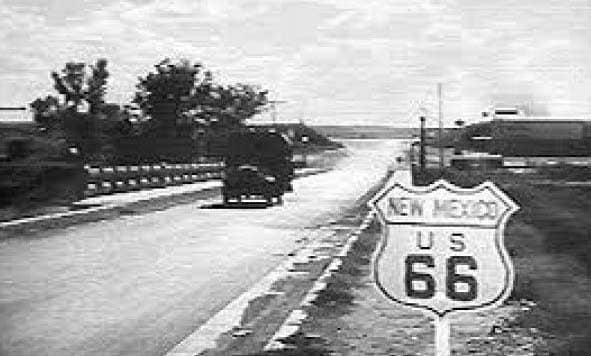
November 11 is a historic day for two purposes, one international and one strictly American. In 1918, World War I fighting ended with an armistice at 11/11/11 — November 11 at 11 a.m. In 1926, historic Route 66 was commissioned in America on November 11, stretching from Chicago (Adams Street) to Santa Monica, California, at the pier.
Route 66 was the famed escape route from the Dust Bowl in Oklahoma and Texas, which lasted a decade beginning in 1930. The highway was sadly decommissioned in 1986 in favor of freeways and interstates, but celebrations are being held along the route all year long.
I asked my AI friend Gemini to recount the history of Route 66, and here it is:
Established on November 11, 1926, U.S. Route 66—also known as the “Will Rogers Highway,” the “Main Street of America,” or the “Mother Road”—is one of the most famous highways in American history. Originally running a total of 2,448 miles, it connected Chicago, Illinois, through Missouri, Kansas, Oklahoma, Texas, New Mexico, and Arizona, before ending at Santa Monica, California.
Historical Evolution
- The Dust Bowl Migration: During the 1930s, the highway served as the primary route for hundreds of thousands of migratory workers escaping the devastating Dust Bowl of the Great Plains. Families headed west toward California in search of agricultural work and economic relief, a journey immortalized in John Steinbeck’s novel The Grapes of Wrath.
- The Post-War Boom: Following World War II, the road experienced a massive surge in automobile tourism. As the American middle class grew and car ownership soared, millions of families took to the highway for vacations, transforming it into a vibrant corridor of roadside culture.
- Decline and Decommissioning: The decline of the highway began with the passage of the Interstate Highway Act of 1956, championed by President Dwight D. Eisenhower. The multi-lane, bypassed interstates offered faster, more direct travel, gradually choking off traffic to the towns along the older highway. It was officially decommissioned from the United States Highway System in 1985.
Cultural Significance
- The Birth of Roadside Americana: Because the highway passed directly through the main streets of hundreds of small towns, it sparked a unique boom in roadside commerce. To catch the eye of passing motorists, business owners erected eccentric, oversized roadside attractions, neon-lit motels, drive-ins, and quirky diners.
- A Symbol of Freedom and Mobility: The highway captured the American imagination as the ultimate symbol of the open road, freedom, and the spirit of Westward exploration. It heavily influenced popular culture, inspiring Bobby Troup’s famous 1946 song “(Get Your Kicks on) Route 66” and a popular 1960s television series.
- Preservation and Revival: Today, the road enjoys a profound legacy. Grassroots preservation associations and historical societies have successfully designated sections of the old highway as National Scenic Byways. Travelers from all over the world continue to flock to the remaining stretches to experience a nostalgic slice of mid-century American history.