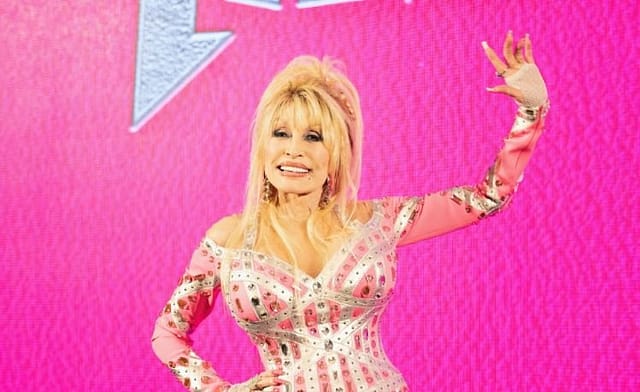
Dolly Parton, the country music superstar whose decades-long career made her one of the most recognizable entertainers in the world, has died at age 80. No cause of death was provided, though later reports said she may have been battling cancer.
President Trump immediately ordered that flags be flown at half-mast in her honor. Tributes poured in from around the globe.
While Parton’s music brought her global fame, those who followed her closely say her philanthropic work — much of it channeled through the Dollywood Foundation and focused on literacy, disaster relief, and healthcare — left an equally lasting mark on the communities she touched.
Roots in Rural Poverty
Parton was one of 12 children raised in a “dirt-poor” household in Sevier County, Tennessee, an upbringing she often cited as the foundation for her charitable instincts. Her father, Robert Lee Parton, left school early to help support his family and never learned to read or write. Parton said she witnessed the limitations and embarrassment that illiteracy caused him throughout his life, an experience she later pointed to as the origin of her lifelong focus on childhood literacy.
That same period also exposed her to the area’s high dropout rates and persistent economic hardship — issues that would later shape the earliest programs of her foundation.
A Global Literacy Program Born Locally
In 1995, Parton launched the Imagination Library, a Sevier County effort created in honor of her father, mailing free, age-appropriate books to children every month from birth until age five. The program has since expanded far beyond its local origins, operating in the United States, Canada, the United Kingdom, Australia, and Ireland. Over its history, the Imagination Library has distributed more than 300 million books to children, roughly 30,000 a day.
Keeping Students in School
Parton’s foundation also targeted education directly through the Buddy Program, introduced in 1991. The initiative offered seventh- and eighth-graders in Sevier County $500 each if they stayed in school through graduation. Local officials credited the program with helping cut the area’s dropout rate from 35 percent to 6 percent. Parton’s foundation later established additional scholarship funds to help high school seniors pursue higher education.
Responding to the 2016 Wildfires
Parton’s philanthropy extended into disaster relief following the wildfires that devastated Gatlinburg and Sevier County in 2016. She created the My People Fund to provide $1,000 per month for six months to families who lost their primary residences in the fires. The fund ultimately distributed more than $12 million in direct relief to affected families.
In the years that followed, Parton continued to direct resources toward disaster recovery across the Southeast, including a $1 million pledge toward hurricane relief for victims in East Tennessee in 2024.
Funding Medical Research and Children’s Health
Parton’s giving also reached into medicine. In 2020, she donated $1 million to Vanderbilt University Medical Center, funding early research that contributed to the development of the Moderna COVID-19 vaccine. She also donated millions over the years to pediatric infectious disease research and children’s hospitals affiliated with Vanderbilt.
A Direct Approach to Giving
Across each of these efforts, Parton’s philanthropic style remained largely consistent: direct, uncomplicated by bureaucracy, and aimed at practical needs — helping children learn to read, keeping teenagers in school, rebuilding homes after disaster, and expanding access to medical care. It was an approach that traced back to the rural Tennessee community where she grew up, and one she maintained even as her programs grew to reach an international scale.