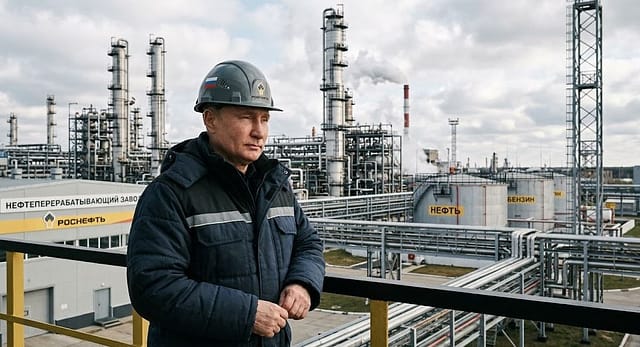
President Donald Trump on Friday announced a high-profile, controversial agreement with Russian President Vladimir Putin to import millions of tons of Russian diesel fuel into the United States and global markets.
This agreement represents a major shift in foreign policy, undercutting existing U.S. sanctions against Moscow in a bid to relieve domestic economic pressure ahead of the upcoming U.S. midterm elections.
Key Details of the Agreement
Volume & Delivery Schedule: Under the terms announced by President Trump, Russia will immediately deliver over 300,000 metric tons (~2.25 million barrels) of diesel fuel, followed by an additional 500,000 metric tons in November, and 1 million metric tons shortly thereafter. Future shipments could expand up to 3 million metric tons.
Sanctions Waiver: To enable the transactions, the U.S. Treasury Department issued temporary import licenses allowing Russian diesel imports through April 7, easing energy restrictions previously imposed on major Russian state-backed energy firms.
Economic & Domestic Motivations
Surging Diesel Prices: Domestic U.S. diesel prices have risen sharply, climbing above $6.25 per gallon nationwide. The spikes stem from global oil supply disruptions related to Middle East conflicts and restricted refining capacities.
Relief for Key Sectors: High diesel prices have triggered financial strain and bankruptcies in the freight and trucking industries while raising operational costs for farmers and ranchers. Trump framed the agreement as a direct measure to bring immediate relief to “farmers, ranchers, and truckers”.
Midterm Politics: Facing competitive midterm elections, the administration is prioritizing lowering energy costs at the pump to curb broader inflation concerns.
International & Domestic Backlash
The move has drawn intense political criticism both internationally and domestically:
Ukraine: Ukrainian President Volodymyr Zelenskyy sharply condemned the arrangement, describing it as a “weak decision” that provides Russia with billions in fuel revenue to finance its ongoing war effort. Zelenskyy warned that “Russia will ‘repay’ the diesel with further terror”.
U.S. Lawmakers: The decision faced Pushback on Capitol Hill, including from members of Trump’s own party. Critics argue that granting sanctions waivers undermines bipartisan congressional attempts to squeeze Moscow’s war economy.
Nato Allies: European officials expressed concern that a unilateral U.S. sanctions workaround weakens the broader Western coalition’s economic leverage over Russia.