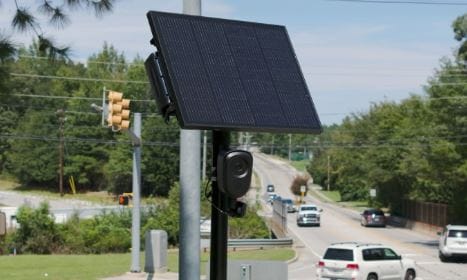
Across thousands of American municipalities, suburban subdivisions, commercial shopping centers, and highway corridors, small solar-powered cameras mounted on unassuming black poles have quietly reshaped the nature of public space. Manufactured by the surveillance company Flock Safety, these automated license plate readers (ALPRs) have been embraced by local police departments, neighborhood homeowners associations, and private businesses as powerful weapons against property crime and violence.
Yet as the network of roadside sensors has expanded into a dense, interconnected surveillance grid, it has also ignited intense national debate. For critics, the rapid growth of this searchable tracking infrastructure feels uncomfortably close to the omnipresent surveillance described in George Orwell’s 1984. For supporters, it is an indispensable modernization of public safety that helps locate abducted children and apprehend violent offenders.
Evaluating whether the public is right to view this technology as the arrival of “Big Brother” requires looking past marketing claims and apocalyptic rhetoric alike. The reality lies in the technical capabilities of the hardware, the legal gray areas surrounding automated tracking, and the governance mechanisms that decide how deeply into civilian life these lenses are allowed to peer.
Beyond Ordinary CCTV: How the Flock Network Functions
To understand why Flock cameras have prompted such widespread scrutiny, one must first distinguish them from conventional closed-circuit television (CCTV). Traditional security cameras record passive video feeds that sit on local hard drives until an incident prompts a human investigator to manually review hours of footage.
Flock cameras operate on an entirely different architectural model. They function as dynamic, automated data collection nodes that transform public roadways into a structured, searchable digital ledger. When a motor vehicle passes a Flock camera, the device automatically captures a high-resolution photograph and extracts key identifying data:
- Automated License Plate Recognition: The camera reads and logs the plate characters along with the issuing state jurisdiction.
- Vehicle Fingerprinting: Software algorithms catalog the vehicle’s make, model, color, and distinguishing physical characteristics—such as roof racks, bumper stickers, tinted windows, custom rims, or body damage.
- Environmental Signal Capture: Newer hardware models have expanded beyond optical recording, incorporating features capable of logging ambient Wi-Fi and Bluetooth signatures as well as detecting distinct audio events in the immediate vicinity.
- Real-Time Hotlist Integration: Every captured plate is instantly checked against active law enforcement databases, including lists for stolen vehicles, outstanding felony warrants, and Amber or Silver Alerts. If a match occurs, nearby patrol officers receive immediate smartphone or dispatch notifications.
- Centralized, Searchable Cloud Storage: Captures are uploaded to a centralized, cloud-hosted database. Authorized users do not simply view static images; they can execute broad queries—such as searching for a “blue pickup with a ladder rack”—and retroactively trace a vehicle’s movements across thousands of cameras over time.
The Public Safety Argument
Law enforcement agencies and neighborhood groups make a straightforward case for the technology: it works. In an era where police departments face staffing shortages and property crimes often go unsolved, automated plate readers offer an automated force multiplier.
Supporters point to tangible outcomes:
- Time-Critical Rescues: When an Amber Alert is issued for an abducted child, Flock alerts can provide police with near-instantaneous leads regarding the suspect vehicle’s direction of travel, dramatically compressing response times during critical hours.
- Stolen Vehicle Recovery: Auto theft often serves as a feeder mechanism for other criminal activities. Immediate hotlist alerts allow officers to intercept stolen cars before they are used in armed robberies or stripped for parts.
- Solving Violent Offenses: In drive-by shootings, homicides, or carjackings where witnesses only remember a partial description or the color of a getaway car, investigative queries can isolate matching vehicles that passed the scene within a specific time window, providing crucial leads where none previously existed.
For many community leaders and municipal officials, these measurable investigative successes represent a proportionate and modern response to crime prevention.
The Friction Points: Why Civil Liberties Groups Are Alarmed
Despite these operational benefits, privacy advocates, legal scholars, and civil liberties organizations argue that the systemic risks of unregulated vehicle tracking far outweigh its crime-fighting utility. Their concerns center around five core vulnerabilities.
1. “Warrant-Level” Tracking Without a Warrant
Under established Supreme Court precedent, law enforcement is generally required to obtain a probable-cause search warrant before attaching a physical GPS tracker to a suspect’s vehicle. The rationale is clear: continuous, prolonged location tracking paints an intimate mosaic of an individual’s personal life.
Flock cameras operate in a constitutional gray area. Because vehicles travel on public thoroughfares where drivers have a diminished expectation of privacy, law enforcement agencies typically do not need a warrant to query ALPR databases. Yet because the camera network is so pervasive, piecing together dozens of individual camera captures can effectively recreate a driver’s complete daily itinerary.
Over days or weeks, these automated records can reveal:
- Visits to specialized medical clinics or psychiatric care facilities
- Attendance at places of worship
- Participation in addiction recovery programs like Alcoholics Anonymous
- Presence at union halls, political rallies, or community organizing events
Critics argue that when automated roadway cameras replicate the continuous surveillance of a GPS tracker, the historical justification for warrantless public-space observation collapses.
2. Network Effects and Inter-Agency Sharing
The privacy implications of an ALPR system expand exponentially as local networks interconnect. Flock’s platform allows participating agencies to share their camera feeds across municipal, county, and state lines.
Consequently, a camera purchased by a suburban homeowners association or a small municipal police department does not simply protect a local neighborhood. It becomes an integrated node in a nationwide surveillance web. An investigator in one state can easily search the movement history of a vehicle traveling hundreds of miles away in another, often without the knowledge of local residents or any form of local judicial oversight.
3. Insider Misuse and Stalking
Centralized location databases present an inherent temptation for insider abuse. Investigative reporting and public agency audit logs across various jurisdictions have documented repeated instances of law enforcement personnel misusing surveillance tools for personal reasons—such as tracking ex-spouses, surveilling romantic rivals, or vetting personal acquaintances.
While reputable systems maintain audit trails, access controls at the local agency level can be uneven. In departments where supervisors rarely audit query justifications, the system relies on an honor code that is susceptible to compromise.
4. Mission Creep and Sensitive Investigations
Technologies introduced to address narrow, high-severity crimes frequently suffer from “mission creep.” Civil liberties organizations, including the American Civil Liberties Union (ACLU) and the Electronic Frontier Foundation (EFF), have raised alarms regarding the potential use of ALPR data for regulatory, administrative, or politically sensitive enforcement.
Specific areas of concern include:
- Cross-Border Legal Conflicts: Queries aimed at identifying out-of-state travel for healthcare procedures that are restricted in one state but legal in another, such as reproductive healthcare.
- Civil Immigration Enforcement: Inter-agency data sharing that funnels local vehicle sighting records into federal immigration monitoring systems.
- Monitoring Protest Activity: Querying camera clusters near permitted public demonstrations to identify attendees and log their vehicles.
When a network designed for finding stolen cars is repurposed for monitoring lawful political, social, or medical decisions, it alters the relationship between the citizen and the state.
5. Algorithmic Misreads and False Positives
Automated recognition systems are not infallible. Optical character recognition (OCR) software can misread characters under poor lighting, bad weather, or high speeds—confusing the number 0 with the letter O, or misidentifying the issuing state on a out-of-state plate.
When an algorithmic misread triggers an automated hotlist alert for a stolen vehicle or a wanted violent felon, patrol officers often initiate a “high-risk” or “felony” traffic stop. These encounters routinely involve drawn firearms, orders to exit vehicles at gunpoint, and intense physical stress. When applied to innocent motorists due to an unverified software error, the potential for traumatic or dangerous escalations is significant.
Evaluating the “Big Brother” Metaphor
Is the public right to see Flock cameras as the arrival of Big Brother?
In the literal, literary sense, the comparison is imperfect. George Orwell’s fictional dystopia featured an intentional, centrally controlled, totalitarian apparatus designed explicitly for state-mandated ideological suppression. Flock cameras, by contrast, emerged from private enterprise and decentralized local purchasing decisions, intended by their operators to solve everyday property crimes and protect communities.
Yet as a cultural metaphor for persistent, searchable, population-scale tracking, the warning is well-founded.
When private companies and public police forces assemble a searchable archive of the physical movements of millions of unaccused citizens, they create an architecture capable of mass surveillance. The fact that the system was built with good intentions does not diminish its capacity for overreach if institutional guardrails fail.
Guardrails for Democratic Accountability
The deployment of automated plate readers does not have to be an all-or-nothing choice between public safety and personal privacy. Communities seeking to benefit from investigative technology without sacrificing constitutional norms can establish practical, enforceable safeguards:
- Strict Purpose Limitations: State and municipal laws should clearly delineate the offenses for which ALPR data may be queried, strictly limiting access to serious felonies and active emergencies while banning queries for civil infractions, code enforcement, or administrative monitoring.
- Warrant Requirements for Historical Searches: While real-time hotlist alerts for active stolen vehicles may proceed under standard public-roadway rules, querying a vehicle’s historical travel patterns over an extended period should require a probable-cause search warrant reviewed by an independent judge.
- Short Retention Windows: Data representing innocent drivers who are not linked to any active investigation should be automatically purged within a narrow timeframe (such as 14 to 30 days), preventing the accumulation of permanent lifestyle archives.
- Mandatory Human Verification: Departmental policies must prohibit officers from initiating high-risk enforcement stops based solely on an automated match. Officers must be required to visually confirm the plate characters and the issuing state before taking tactical action.
- Data Sharing Boundaries: Municipalities should maintain explicit control over data-sharing agreements, barring the export of local travel records to outside entities for use in non-criminal or extraterritorial investigations.
- Transparent Auditing and Meaningful Remedies: Agencies must conduct regular, independent audits of search justification logs and publish aggregate transparency reports detailing how often the system is used. Stalking, unauthorized querying, or sharing credentials must carry enforceable disciplinary and criminal penalties.
Conclusion
Flock cameras represent a critical juncture in the evolution of modern surveillance. Left unchecked, the seamless integration of vehicle recognition, environmental sensors, and multi-agency databases creates an infrastructure that mirrors the functional reach of mass surveillance.
The public’s apprehension is not mere paranoia; it is an intuitive recognition that when movement in public space becomes permanently indexed and searchable, an essential boundary of civic freedom is crossed. Whether these systems remain focused investigative aids or evolve into a permanent digital panopticon will ultimately depend on whether democratic communities have the resolve to impose binding legal limits on their power.