
If any two abbreviations symbolize the post-COVID era, they are GLP-1 and ChatGPT. The first is doubtlessly the most effective weight-loss compound ever offered as an approved medicine (think Wegovy); the second is the first public application of artificial intelligence, commonly called AI these days.
Leaving aside fat thighs and bellies, AI is all the news these days. The Wall Street Journal in just the past two days has run articles about addiction to Chatbots like ChatGPT, and also on the first college class to graduate with AI as their constant companion.
Probably the commentary drawing the most headlines, however, was the depiction of AI by Pope Leo XIV as a modern Tower of Babel. Now, I’m certainly no biblical scholar, so calling something a Tower of Babel is not an easily discernible metaphor for me.
Therefore, I asked my AI friend Gemini to dissect the Pontiff’s comments for me. Here’s the answer:
Whether artificial intelligence is truly a modern “Tower of Babel” depends entirely on how you view the intersection of technological ambition and human nature.
Pope Leo XIV’s metaphor, laid out in his May 2026 encyclical Magnifica Humanitas, is a highly sophisticated critique of the “Babel syndrome”—the idea that humanity, driven by the idolatry of profit and centralized tech power, is trying to build a system of total self-sufficiency that transcends moral boundaries and reduces the human soul to mere data.
To see if the analogy holds up, it helps to break down the Pope’s argument alongside the counterarguments from the tech world.
Why the Metaphor Fits: The “Babel Syndrome”
In the biblical narrative, the Tower of Babel wasn’t just a tall building; it was an act of supreme hubris. Humanity sought to build a monolith to “make a name for themselves” and reach the heavens without divine blessing. The project ultimately collapsed into confusion, fracturing human communication.
Pope Leo argues that AI mirrors this ancient myth in three distinct ways:
- The Hubris of Total Translation: The builders of Babel believed a single, unified effort could conquer the heavens. Similarly, the Pope warns against the pretense that a digital language can fully translate everything—including the “mystery of the human person”—into binary code, data points, and performance metrics.
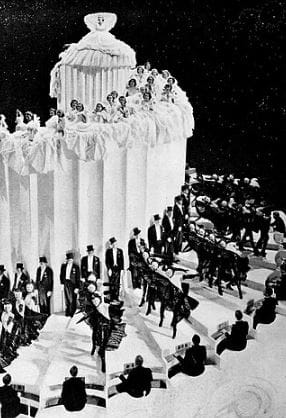
- The Concentration of Transnational Power: Just as Babel required a hyper-centralized command structure, modern frontier AI development is concentrated in the hands of a few massive, transnational tech corporations. This creates a “culture ofClick to Watch a Musical Tower of Babel from the 1936 film ‘The Great Ziegfeld’power” that operates largely outside the democratic oversight of nation-states or the common good.
- The Breakdown of Truth and Communication: Ironically, the original Tower of Babel resulted in humans being unable to understand one another. Today, the rapid proliferation of AI-driven deepfakes, algorithmic polarization, and automated disinformation is causing a modern crisis of communication where shared objective truth is fracturing.
The Counter-Perspective: AI as a Shared Tool, Not an Idol
Tech advocates and organizations (such as the Information Technology and Innovation Foundation) argue that the Babel metaphor misses the mark by treating AI as a monument to human pride rather than what it actually is: a highly advanced tool.
- Solving Human Problems: Unlike the Tower of Babel, which was built for vanity, AI is being deployed to cure diseases, model climate change, and optimize global food supply chains. From this perspective, AI is an expression of human stewardship, not defiance.
- Universal Understanding Instead of Confusion: If anything, AI models are doing the exact opposite of the Babel curse. With real-time neural translation, LLMs are actively breaking down language barriers globally, allowing people of completely different cultures to communicate seamlessly for the first time in history.
- The Source of Moral Failure: Opponents of the metaphor point out that technology itself is morally neutral. The algorithms reflect the values, biases, and intentions of the humans who build them. The danger is not the “tower” itself, but the lack of ethical governance surrounding its construction.
The Verdict
Is AI a modern Tower of Babel?
If we look at the unregulated race for dominance, the transhumanist desire to replicate or replace human consciousness, and the splintering of public discourse through algorithms, the comparison is remarkably apt. It serves as a stark warning about human limitation and the dangers of letting tech giants dictate the rules of human visibility.
However, Pope Leo himself noted in the encyclical that the solution isn’t to reject the technology entirely. He urged humanity to “use it and make it more human.” Ultimately, AI will only become a Tower of Babel if we allow efficiency and profit to entirely displace human empathy, accountability, and moral discernment.