Tariffs may have worked well back in America’s great manufacturing days under President William McKinley, but a couple of decades later, the 16th Amendment shifted revenue collection to taxation of the American public. To his credit, Trump 47 did lower a whole slew of taxes in his “Big Beautiful Bill,” but since then, he has also inflicted tariff mania on the world with the goal of bringing back manufacturing to the U.S.
His April “Independence Day” announcement of new tariffs was later ruled unconstitutional by the U.S. Supreme Court, but that didn’t deter the man. He then turned to Section 122 of the Trade Act of 1974 to impose a 10-percent, across-the-board tariff on all nations. A federal court recently struck that down, and it was already limited to 150 days from the outset.
Now he’s using Section 301, which allows him to impose tariffs in response to “unfair foreign acts, policies, or practices affecting U.S. commerce.” Under 301, he’s targeting countries that fail to “effectively enforce” bans against products created by using “forced labor.”
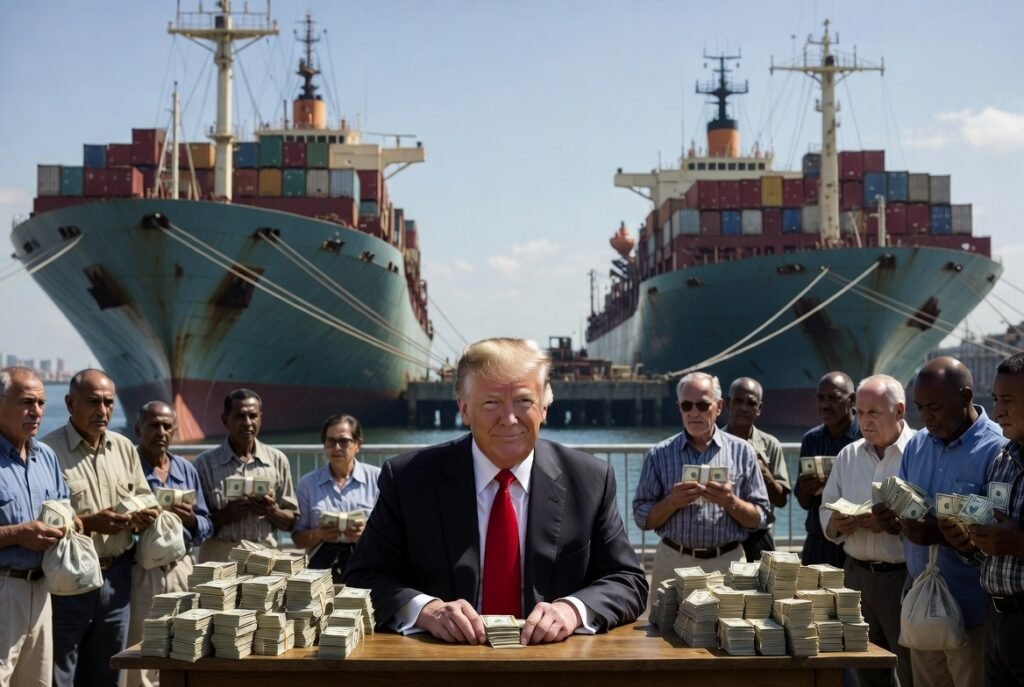
He has singled out six entities — Canada, Ecuador, the European Union, Indonesia, Mexico, and Pakistan — for a 10-percent tariff. All other nations will get a 12.5-percent tax wallop. And a tax is what a tariff is, basically, and it’s paid by the recipients of the products or services, not by the providers.
According to the Wall Street Journal, a 10-percent, across-the-board tariff would raise $1.7 to $2.2 trillion over a decade. Not bad, but Section 301 has so many loopholes that almost everything coming into our shores can be exempted. Trump has already singled out textiles as one lower-rate exception.
Tariffs have become a huge problem for the nation’s farmers, and the Trump administration’s war with Iran has also cut off fertilizer supplies. They’re not a happy camp out there on America’s farmlands.
Now, those nameless leaders in Iran are well aware of all of this, so they are in no hurry to make a deal with the Trumpster. He is going to suffer more than they are as the standoff continues. Iranian mullahs and others in charge don’t have to worry about retaining their power or responding to public demands.
But Trump and the GOP do. Come September and there’s no Iran deal, the tariffizer-in-chief may have to raise the white flag and give Iran what it wants, but paper it over as some kind of victory.