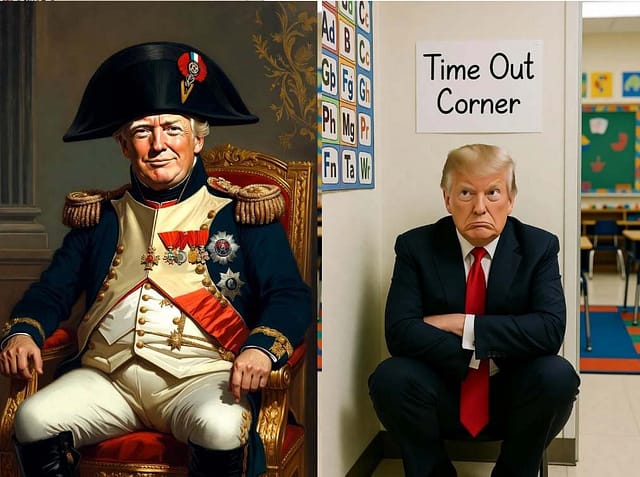
Since returning to the White House in January 2025, Donald Trump has governed with a distinctive duality. One face is that of the emperor: decisive, unapologetic in the exercise of American power, willing to smash through norms, international law, and bureaucratic inertia to deliver results that supporters hail as transformative. The other is the dunce: overconfident, prone to misjudging complexity, and capable of turning bold strokes into prolonged headaches through miscalculation or excess.
From early 2025 through mid-2026, this tension has defined his second term—nowhere more vividly than in foreign military adventures, domestic immigration enforcement, and tariffs.
The Emperor’s Triumph in Venezuela
In the emperor mode, Trump has shown a capacity for bold, high-stakes action that achieves tangible wins. The clearest example came on January 3, 2026, with the U.S. military intervention in Venezuela. After months of pressure, including strikes on alleged drug-related targets and a military buildup, U.S. special operations forces—drawing on Delta Force, the 160th SOAR, and other elite units—conducted a rapid operation that captured President Nicolás Maduro and his wife, Cilia Flores. Trump announced the United States would “run” the country pending a transition, focusing on oil infrastructure, disrupting narco-trafficking networks, and sidelining the Maduro regime.
The operation was tactically impressive: Maduro was extracted and faced U.S. charges, a new interim leadership under Delcy Rodríguez emerged under heavy American influence, and oil deals were struck. Some political prisoners were released. Polls in Venezuela indicated substantial support for change and a sense that the country was moving in a positive direction.
Trump’s domestic approval ticked upward modestly in the immediate aftermath. To his base and many realists, this was the emperor at work—asserting hemispheric dominance in the spirit of a revived Monroe Doctrine, prioritizing U.S. interests in energy and security over multilateral consensus or lengthy nation-building debates.
Similar strength appeared elsewhere. Trump helped broker an Israel-Hamas ceasefire in October 2025 that returned remaining hostages and has largely held into its later phases, drawing praise even from unlikely quarters. He hosted a White House ceremony for an Armenia-Azerbaijan peace agreement.
On the domestic front, aggressive border measures and interior enforcement produced sharp drops in illegal crossings to levels not seen in decades, hundreds of thousands of formal deportations, and claims of millions of self-deportations. Administration officials credit the approach with contributing to measurable declines in certain violent crimes in major cities.
Tax-cut extensions, deregulation, and an “energy dominance” push coincided with reported GDP growth and record oil/gas production. These moves reflect the emperor’s toolkit: concentrated executive power, willingness to use force or coercion unilaterally, loyalty-driven personnel, and a focus on visible metrics of strength.
The Dunce’s Reversal in Iran
Yet the same instincts that produced the Venezuela success soon exposed the dunce. Emboldened by the relatively clean extraction of Maduro, Trump and his team appear to have believed a similar decisive blow could work against Iran.
On February 28, 2026, the United States and Israel launched Operation Epic Fury: nearly 900 strikes in the opening hours that killed Supreme Leader Ali Khamenei and numerous senior officials, while targeting missiles, air defenses, and infrastructure.
What followed was no quick resolution. Iran responded with waves of missiles and drones across the region, reigniting conflict with Hezbollah, causing thousands of deaths and mass displacement. A large share of Lebanon’s population fled. The Strait of Hormuz faced severe disruption. Global fuel shortages and higher energy prices rippled outward.
Ceasefires in April and a June memorandum of understanding collapsed amid renewed Iranian attacks on shipping and U.S. forces. By July 2026 the conflict had stretched into its fifth month, with Trump reportedly shifting into “revenge mode.” Mixed messaging on objectives, troop surges, and no clear end in sight defined the administration’s posture.
American public support frayed as the war became deeply polarizing and politically costly. The miscalculation was classic dunce: treating a complex theocratic state with layered proxy networks, nuclear ambitions, and geographic chokepoints as analogous to a weakened Latin American strongman. Tactical brilliance in the opening strikes gave way to strategic messiness—exactly the reverse of the Venezuela outcome Trump had hoped to duplicate.
Deportations: Strength Meets Overreach
The same pattern played out at home with immigration. The emperor delivered on the core campaign promise of mass deportations. ICE and partner agencies ramped up interior enforcement dramatically: arrests and removals multiplied, detention capacity expanded, border encounters plummeted, and the administration reported hundreds of thousands of deportations alongside large-scale self-deportations. Criminal aliens featured prominently in official tallies, and some crime metrics improved.
The dunce, however, turned operational success into political and legal trouble. Aggressive tactics produced high-profile scandals: more than 170 U.S. citizens detained by immigration agents in 2025 alone, often despite presenting documents; warrantless home entries guided by internal memos later challenged as unconstitutional; and lethal force incidents, including the fatal shootings of U.S. citizens Renée Good and Alex Pretti in Minneapolis during 2026 operations.
Deaths in ICE custody rose sharply. Protests erupted in multiple cities, polling showed growing majorities believing enforcement had “gone too far,” and legal challenges mounted over racial profiling (“Kavanaugh stops”), due process, and citizen rights. What began as a popular hardline stance generated backlash that complicated the broader agenda.
Tariffs: The Emperor’s Miscalculation
On “Liberation Day” in April 2025, Trump launched his most aggressive trade offensive yet: sweeping tariffs that would eventually spike above 100 percent on Chinese goods, alongside substantial levies on allies. The emperor’s rhetoric was uncompromising—America would no longer tolerate trade deficits, intellectual property theft, or dependence on foreign supply chains. Reshoring manufacturing, restoring industrial dominance, and wielding tariff leverage as a geopolitical weapon became central pillars of economic policy. The administration defied international consensus, dismissed warnings from economists and business groups, and projected absolute confidence that trading partners would capitulate.
Initial results seemed to validate the emperor’s approach. China returned to negotiations under pressure. Some manufacturing announcements trickled in. Trump’s base celebrated the willingness to confront globalist orthodoxy head-on. The stock market wobbled but held. For a few months, the tariff offensive looked like another display of unilateral strength—economic statecraft in the mold of the Venezuela operation.
But the dunce’s miscalculations soon surfaced. Retaliatory tariffs from China, the EU, and other partners hit American agriculture, technology, and manufacturing exports hard. Supply chain disruptions cascaded through key sectors—automotive, electronics, pharmaceuticals—driving up costs and creating shortages. Inflation, which had been moderating, ticked upward as businesses passed tariff costs to consumers. Business investment stalled amid uncertainty over trade policy. By late 2025, the administration faced mounting pressure from affected industries, Republican lawmakers in farm states, and consumers feeling the pinch at checkout.
The partial deal struck with China in early 2026 exposed the strategic incoherence. After months of maximalist demands, Trump accepted a compromise that rolled back some tariffs in exchange for modest Chinese concessions—far short of the transformative restructuring promised on Liberation Day. The deal signaled that tariff leverage had limits, that retaliation imposed real costs, and that bold opening moves could not substitute for sustainable strategy. Like Operation Epic Fury in Iran, the tariff offensive demonstrated tactical audacity giving way to prolonged economic turbulence, mixed messaging, and an outcome that fell well short of the emperor’s initial vision.
The Persistent Duality
Across Venezuela, Iran, deportations, and tariffs alike, the pattern holds: ambitious initiatives launched with emperor-mode confidence collide with dunce-mode miscalculation. Foreign policy wins on narrow deals sit alongside regional quagmires. Domestic restructuring meets resistance and unintended consequences. The emperor seizes opportunities and projects dominance; the dunce underestimates second-order effects, institutional friction, and the limits of force or coercion when applied indiscriminately.
As of July 2026, Trump’s second term remains a study in this unresolved tension. Strength has produced real shifts—Maduro in custody, borders far tighter, certain diplomatic breakthroughs—but misjudgments have exacted costs in blood, treasure, public trust, and strategic coherence. Whether the emperor or the dunce ultimately defines the legacy will depend on how these forces balance in the remaining years. The record so far suggests both faces will continue to contend for control.
SYNTHESIS:
The ‘Emperor’ Persona (The All-Powerful Strongman)
This lens presents Trump as a calculating demagogue who understands political theater, controls the news cycle, and systematically dismantles democratic norms.
The Master of ‘Distraction Politics’
- The Media Framing: Every outrageous quote, late-night post, or cabinet shake-up is viewed not as a mistake, but as a calculated maneuver to hijack the 24-hour news cycle and divert attention away from legal trouble, controversial policies, or ethics investigations.
- Key Example: When news broke regarding major legal filings or economic downturns, headline-grabbing announcements—like sudden tariff threats or personal attacks on judges—dominated the front pages, forcing cable news to abandon the original scandal.
Unchecked Executive Will & Party Dominance
- The Media Framing: An imperial figure who transformed the Republican Party into a personal movement, enforcing absolute loyalty and marginalizing any establishment dissenters.
- Key Example: The political purge of traditional GOP figures (such as Liz Cheney or Mitt Romney) and the push for expansive “Unitary Executive” power—using executive orders to bypass Congress on immigration, trade, and national emergencies.
The Foreign Policy Strongman
- The Media Framing: A leader who ignores traditional diplomacy in favor of raw, unilateral leverage—dictating terms to allies and adversaries alike.
- Key Example: “Tariff diplomacy” (using sweeping trade penalties as leverage) and personal, summit-style dealmaking with authoritarian leaders, bypassing the State Department.
The ‘Dunce’ Persona (The Incompetent Populist)
This lens presents Trump as an erratic leader driven by raw impulse and flattery, struggling with basic policy mechanics and relying on sycophants rather than expertise.
Misunderstanding Policy Fundamentals
- The Media Framing: Media outlets highlighting moments where Trump demonstrated a lack of familiarity with standard economic, medical, or national security realities.
- Key Example: Publicly insisting that foreign nations—rather than domestic importers—pay the cost of U.S. tariffs, or his famous live press briefing speculation during the COVID-19 pandemic regarding disinfectants and UV light inside the body.
Administrative Chaos & Operational Blunders
- The Media Framing: Coverage depicting a chaotic White House marked by staggering staff turnover, leaks, and public feuds with handpicked officials.
- Key Example: High-profile staffing disasters where appointees lacked basic qualifications, along with operational security lapses (e.g., confidential briefing documents left behind in public areas or high-level security chats including unauthorized journalists).
Vulnerability to Flattery
- The Media Framing: Analysts pointing out that his strategic moves were rarely about deep ideology, but rather about who had spoken to him last or offered the most praise.
- Key Example: Foreign leaders and domestic aides discovering that the quickest route to favorable policy decisions was lavish red-carpet receptions, verbal flattery, or personal gifts.