Armed with this information, Colossal’s team turned to CRISPR-Cas9, the revolutionary gene-editing technology that allows for precise modifications to DNA. They began with somatic cells taken from captive gray wolves (Canis lupus) and made 20 targeted genetic edits across 14 different genes. These modifications were designed to replicate physical features associated with dire wolves: a larger, more robust body size; a broader jaw structure capable of crushing bone; paler coat coloration; and even distinct vocalization patterns that researchers believe may approximate the sounds dire wolves once made.
The edited cells then underwent Somatic Cell Nuclear Transfer (SCNT), the same cloning technique used to create Dolly the sheep in 1996. Scientists removed the nucleus from an enucleated egg cell taken from a domestic dog and replaced it with the genetically modified nucleus from the edited gray wolf cells. The resulting embryos were implanted into surrogate domestic dogs—a choice driven by practical considerations, as domestic dogs are more readily available and easier to work with than wild wolves.
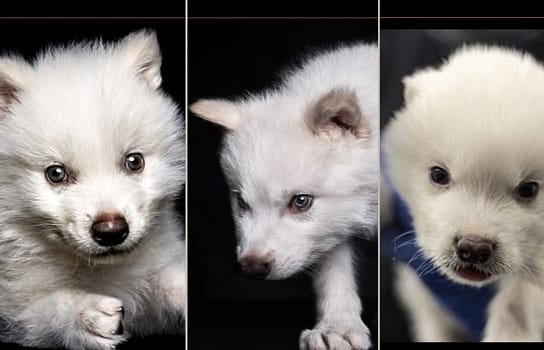
After a standard canine gestation period, three puppies were born. They are larger than typical wolf pups, with distinctive jaw structures and coat patterns that echo their extinct predecessors. Yet they are, fundamentally, gray wolves—albeit gray wolves carrying a carefully curated selection of dire wolf traits.
The Science of What’s Really Been Created
While Colossal’s marketing materials celebrate the “de-extinction” of the dire wolf, independent geneticists and evolutionary biologists have been quick to point out crucial distinctions that complicate this narrative.
Genome sequencing of fossil remains has established that dire wolves (Aenocyon dirus) diverged from other canids nearly 5.7 million years ago. This isn’t merely a different species—it’s an entirely separate genus, as genetically distinct from gray wolves as lions are from house cats. The evolutionary gulf between dire wolves and gray wolves encompasses hundreds of thousands of genetic differences, affecting everything from metabolism and immune function to brain structure and behavior.
Colossal’s animals, by contrast, carry modifications to just 14 genes—a tiny fraction of the total genetic differences that separated dire wolves from their modern relatives. While these edits successfully replicate certain visible physical traits, they leave the vast majority of the genome unchanged. The result is an animal that looks somewhat like a dire wolf in certain respects but remains, at the genetic level, overwhelmingly a gray wolf.
“These are genetically engineered gray wolf proxies, not resurrected dire wolves,” explained Dr. Angela Perri, a zooarchaeologist who has studied ancient canid remains. “It’s an impressive feat of genetic engineering, but we need to be clear about what’s actually been accomplished here.”
Even Colossal’s own scientific leadership has acknowledged this distinction. In technical presentations to the scientific community, they describe the animals as “functionally gray wolves carrying modified traits” rather than true dire wolves. The company argues, however, that creating a perfect genetic replica was never the goal. Instead, they aim to produce animals that can fulfill similar ecological roles and exhibit key physical and behavioral characteristics of the extinct species.
This raises profound questions about what de-extinction actually means. Is an animal that looks and potentially behaves like an extinct species, but lacks most of its genetic heritage, truly a resurrection? Or is it something else entirely—a living monument, perhaps, or a genetically engineered approximation?
The Mammoth in the Room
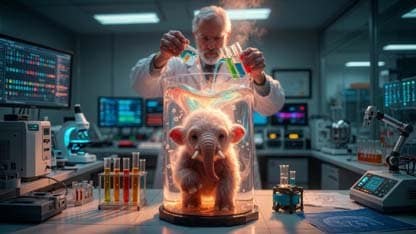
While the dire wolf project has generated headlines, it represents only a proof of concept for Colossal’s far more ambitious flagship initiative: bringing back the woolly mammoth.
The company, co-founded in 2021 by renowned geneticist George Church and entrepreneur Ben Lamm, has set an audacious timeline. By 2028, Colossal aims to produce its first woolly mammoth calves—or more accurately, Asian elephant-mammoth hybrids that carry key mammoth traits.
The approach mirrors the dire wolf project but on a vastly more complex scale. Scientists are using CRISPR to edit Asian elephant (Elephas maximus) genomes, introducing genes responsible for the woolly mammoth’s cold-adapted features: dense, shaggy fur; small ears that minimize heat loss; subcutaneous fat layers for insulation; and hemoglobin variants that function efficiently in frigid temperatures.
The ecological rationale extends beyond mere spectacle. Woolly mammoths were ecosystem engineers, shaping the Arctic tundra and boreal forests through their feeding and movement patterns. By knocking down trees, trampling shrubs, and fertilizing grasslands with their dung, mammoths helped maintain the productive “mammoth steppe” ecosystem that once covered vast stretches of the Northern Hemisphere. Colossal argues that reintroducing mammoth-like animals could help restore these degraded ecosystems and even combat climate change by promoting grassland growth, which reflects more sunlight and keeps permafrost frozen.
Yet the mammoth project faces technical challenges that dwarf those of the dire wolf effort. Chief among them is the question of gestation. Asian elephants have a 22-month pregnancy—the longest of any land mammal. Using endangered Asian elephants as surrogates is ethically problematic and practically unscalable. To produce the herds necessary for meaningful rewilding, Colossal would need dozens or hundreds of calves, not just a handful.
The company’s solution is to develop artificial womb technology capable of supporting elephant-sized fetuses through nearly two years of development. This technology doesn’t yet exist at the required scale, though Colossal has invested heavily in its development. In March 2025, the company showcased genetically modified mice carrying woolly mammoth traits—animals with enhanced cold tolerance, woolly coats, golden-brown fur, and curly whiskers—as a proof of concept for the genetic engineering approach.
A Growing Portfolio of Extinction Reversals
The dire wolf and woolly mammoth represent just two projects in Colossal’s expanding de-extinction portfolio. The company, which has raised $615 million in funding and achieved a valuation exceeding $10 billion, is also working to resurrect the dodo bird, the Tasmanian tiger (thylacine), and the moa—a giant flightless bird from New Zealand.
Each project presents unique challenges. The dodo, extinct since the late 17th century, would be recreated using its closest living relative, the Nicobar pigeon. The thylacine, which survived until 1936, offers better-preserved DNA samples but requires developing marsupial-specific reproductive technologies. The moa, gone for over 600 years, would need to be engineered from ratite birds like emus or ostriches.
Colossal has also acquired ViaGen Pets & Equine, a company specializing in cloning beloved pets and prize horses, providing both revenue and technical expertise in reproductive technologies. The company frames its work not merely as resurrection of the dead, but as development of genetic tools that can help save endangered species currently teetering on the brink of extinction.
Critics, however, question whether the massive resources devoted to de-extinction might be better spent protecting species that still exist. A 2017 paper in Nature Ecology & Evolution argued that the money required to resurrect even a handful of extinct species could protect far more biodiversity if directed toward conventional conservation efforts. With over a million species currently threatened with extinction, the opportunity cost of de-extinction looms large.
The Future of Life, Redesigned
As Romulus, Remus, and Khaleesi grow from puppies into adult wolves, they will serve as living test cases for questions that extend far beyond biology. What obligations do we have to the species we’ve driven to extinction? Can we engineer our way out of the biodiversity crisis? And perhaps most fundamentally: just because we can bring back echoes of extinct life, should we?
The animals Colossal creates will never be perfect replicas of their extinct predecessors. They will be something new—chimeras of ancient and modern, wild and engineered, extinct and extant. Whether they represent humanity’s redemption for past ecological sins or hubris in the face of nature’s complexity may depend less on the science itself than on what we choose to do with these resurrected ghosts.
What remains clear is that we have entered an era where extinction is no longer necessarily permanent. The boundary between past and present, between lost and living, has become permeable in ways our ancestors could never have imagined. As Colossal races toward its 2028 mammoth deadline, the world watches to see whether de-extinction will prove to be conservation’s most powerful tool—or its most dangerous distraction.
The dire wolves, such as they are, have returned. The mammoths may follow. What comes after that is a question not just for scientists, but for all of us who will share the planet with these ghosts made flesh.
 Colossal Biosciences, the Dallas-based biotechnology company behind the project, declared it a milestone in de-extinction science. But as the initial excitement fades, a more nuanced picture emerges—one that reveals both the remarkable capabilities of modern genetic engineering and the significant gap between what’s scientifically possible and what constitutes true biological resurrection.