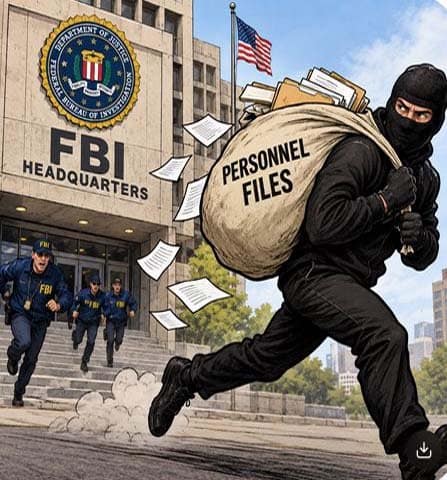
A major cybersecurity incident involving the Federal Bureau of Investigation (FBI) has sparked widespread operational and personal safety concerns across the intelligence community, following claims by the digital extortion group ShinyHunters that it had accessed sensitive personnel and applicant databases.
According to reported details of the incident, the intrusion specifically targeted the FBIJobs.gov portal and the bureau’s Special Agent Applicant Portal. Threat actors subsequently circulated a sample containing approximately 5,000 records. The exposed information reportedly includes the names, home addresses, phone numbers, and Social Security numbers of FBI agents and applicants, as well as the names of immediate family members, including spouses and siblings.
The data sample also contained detailed internal role descriptions, reportedly identifying electronic surveillance leads and intelligence analysts assigned to sensitive portfolios, including China, Russia, Hezbollah, and international drug cartels. Independent cybersecurity researchers and reporters said they verified portions of the leaked sample against credit bureau files and prior breach databases, confirming the personal details of several active bureau employees as well as Director Kash Patel.
In a departure from standard financially motivated ransomware attacks, ShinyHunters claimed the operation was not driven by monetary demands. Instead, the group demanded that the FBI retract a Public Service Announcement (PSA) issued in May 2026, which had labeled ShinyHunters as extortionists who exaggerate claims to intimidate victims into paying. The group reportedly imposed a one-week deadline for the bureau to pull the notice.
In response, the FBI confirmed that it is “actively and aggressively investigating” the claim in coordination with third-party vendors that support the portals. Investigators are working to establish whether the intrusion occurred through third-party vendor infrastructure or within the FBI’s own enterprise systems. To prevent further exposure, the bureau immediately isolated and took the FBIJobs.gov site and applicant systems offline.
Security, counterintelligence, and cyber law experts have expressed deep concern regarding the fallout for active agents and their families. Analysts noted that the exposure of residential addresses, phone numbers, and family member details leaves law enforcement personnel vulnerable to harassment, targeted extortion, swatting, and direct physical danger.
The compromise of specific role descriptions poses an acute counterintelligence hazard. Clandestine operatives and intelligence analysts who do not publicly disclose their employment face heightened exposure, as foreign intelligence agencies—such as state-sponsored actors from China or Russia—can cross-reference residential information with operational duties.
Former FBI officials have compared the incident to the 2015 Office of Personnel Management (OPM) breach, warning that once personnel records, operational roles, and family information are circulating on the dark web, the data can be weaponized indefinitely to track, dox, and exert pressure on law enforcement personnel throughout their careers.