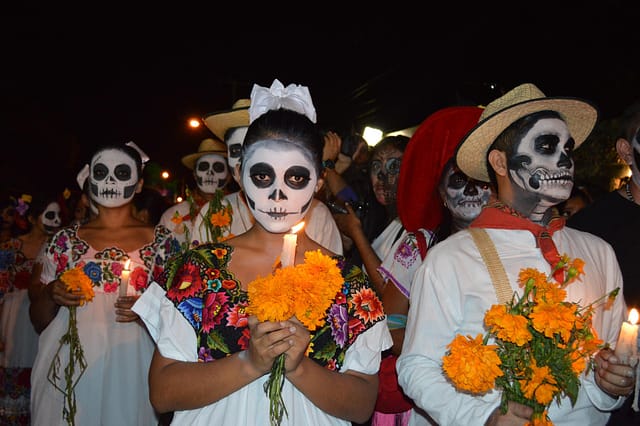
Día de los Muertos (Day of the Dead) is a rich, vibrant holiday dedicated to honoring and celebrating deceased loved ones.
The Origins of Day of the Dead
The origins of Día de los Muertos stem from a blend of Indigenous Mesoamerican traditions and European Catholic practices.
Indigenous Roots (Mesoamerica)
Long before Spanish contact, Indigenous groups across Mesoamerica—including the Aztecs, Maya, Toltecs, and Mixtecs—viewed death not as a terrifying end, but as a natural phase in the continuous cycle of life.
The Journey of the Soul: Aztec mythology held that when a person died, their soul traveled through nine levels of the underworld (Chicunamictlán) over several years before reaching their final resting place in Mictlán.
Families would provide food, water, and tools to help the spirit on this difficult journey. The Festival of Mictecacihuatl: An annual multi-week festival in late summer was dedicated to Mictecacihuatl, the Lady of the Dead. Celebrants honored ancestors with food, offerings, and decorative skulls—a practice that directly prefigured modern ofrendas (altars) and sugar skulls (calaveras).
Catholic Integration
When Spanish conquistadors arrived in the 16th century, Catholic missionaries attempted to convert the Indigenous population and suppress pagan practices.
November 1 (Día de los Inocentes / All Saints’ Day): Dedicated to honoring deceased infants and children.
November 2 (Día de los Muertos / All Souls’ Day): Dedicated to honoring deceased adults.
Does It Have Anything to Do with Halloween?
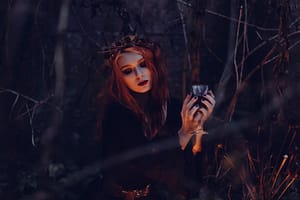
The primary connection between the two holidays is chronological and indirect. They overlap on the calendar because both absorbed aspects of Christian feast days, but their ancestral roots, purpose, and tone are completely different.
| Feature | Halloween | Día de los Muertos |
| Cultural Roots | Ancient Celtic festival of Samhain | Ancient Aztec/Mesoamerican rituals & Catholicism |
| Core Concept | Ward off, hide from, or mock scary/evil spirits | Welcome back the souls of loved ones for a joyous reunion |
| Central Symbolism | Ghosts, monsters, jack-o’-lanterns, costumes | Ofrendas (altars), marigolds (cempasúchil), sugar skulls, pan de muerto |
| Tone | Playful, spooky, frightening, secular/festive | Joyful, reverent, celebratory, intimate, family-centered |
The Calendar Connection Explained
Halloween evolved from Samhain, a Celtic pagan festival marking the end of the harvest.
The Celts believed the veil between the living and dead was thinnest on October 31, allowing spirits to cross over. When the Catholic Church designated November 1 as All Saints’ Day, the evening before became “All Hallows’ Eve” (Halloween). Día de los Muertos acquired its November 1–2 timing simply because the Spanish colonizers aligned the Mesoamerican ancestral rites with those exact same Catholic feast days.
While both holidays rest on an ancient belief that the boundary between the living and spirit worlds loosens at this time of year, Halloween looks outward at the unknown and spooky, whereas Day of the Dead looks inward at memory, love, and family heritage.