Official Findings: The Line Between State Sponsorship and Institutional Negligence
The definitive baseline for official U.S. government findings was established in 2004 with the publication of the bipartisan 9/11 Commission Report. The commission arrived at a clear, carefully phrased conclusion: investigators found “no evidence that the Saudi government as an institution or senior Saudi officials individually funded” al-Qaeda.
However, the report did not deliver an unconditional exoneration of the broader financial and institutional ecosystem within the Kingdom. Rather, the commission documented that Saudi Arabia had long been the primary financial pipeline for al-Qaeda prior to September 11. Millions of dollars flowed to bin Laden’s organization through wealthy private donors, non-governmental charities, and religious foundations.
According to investigative findings, this funding pipeline operated largely unhindered due to lax regulatory oversight and an official reluctance within Saudi governance to scrutinize entities operating under the banner of Islamic charity. The distinction drawn by the commission—between active, top-down state sponsorship and systemic negligence that enabled private radical financing—remains central to the debate today.
From the “28 Pages” to California: Declassified Leads and Field Contacts
For over a decade, public scrutiny centered on a classified chapter of the 2002 Joint Congressional Inquiry into Intelligence Community Activities Before and After the Terrorist Attacks of September 11, 2001. Known colloquially as the “28 Pages,” the section was withheld from the public until its declassification in 2016.
The 28 Pages did not present settled judicial facts; rather, they detailed raw investigative leads, unvetted tips, and preliminary findings suggesting that some of the hijackers received logistical and financial support while living in the United States from individuals with ties to the Saudi government.
The contours of those leads sharpened significantly in September 2021, following an executive order directing the systematic declassification of FBI records compiled during Operation Arabian Knight, a sub-file of the bureau’s broader PENTTBOM investigation.
The newly released FBI documents focused intensively on the early logistical support network established for two of the initial hijackers, Nawaf al-Hazmi and Khalid al-Mihdhar, who arrived in Southern California in early 2000 speaking little English and possessing no familiarity with Western society. The records highlighted two prominent Saudi nationals residing in the area:
- Omar al-Bayoumi: Identified in declassified FBI summaries as a suspected operative of Saudi intelligence, Bayoumi maintained regular contact with Saudi consular officials and received financial stipends through a Saudi aviation contractor. Investigative files show that Bayoumi assisted al-Hazmi and al-Mihdhar shortly after their arrival, helping them secure an apartment in San Diego, co-signing their lease, opening bank accounts, and facilitating translation services.
- Fahad al-Thumairy: An accredited official at the Saudi consulate in Los Angeles and an imam at the King Fahad Mosque in Culver City, Thumairy was identified by federal investigators as a radical cleric. Declassified records indicate that Thumairy and Bayoumi coordinated to manage the hijackers’ arrival and integration into the local community.
While Saudi authorities and Bayoumi himself have long maintained that his assistance was merely a chance charitable encounter between fellow Muslims in a foreign country, FBI analysts argued in investigative memos that the probability of such extensive assistance occurring purely by coincidence was exceptionally low.
Ideological Currents: Wahhabism and the Export of Fundamentalism
Beyond logistics and finance, the connection between Saudi Arabia and global jihadism includes an ideological dimension. For decades prior to 2001, the Saudi state, operating in an alliance between the ruling House of Saud and the country’s conservative religious establishment, spent billions of petrodollars promoting Wahhabism—an austere, fundamentalist interpretation of Sunni Islam—across the globe.
Through state-funded mosques, cultural centers, religious literature, and madrasas spanning from South Asia to the West, this exported orthodoxy sought to counter rival political movements and spread strict religious observance.
Security analysts and counterterrorism experts have argued that while the Saudi state did not advocate al-Qaeda’s violent anti-state insurgency, the global diffusion of Wahhabi doctrine established an ideological infrastructure that intolerant, radicalized groups could exploit. Bin Laden drew upon this puritanical framework, weaponizing its principles against the West and against the Saudi monarchy itself, which he condemned as corrupt and insufficiently Islamic for allowing U.S. military bases on Saudi soil following the 1990–1991 Gulf War.
The Legal Battleground: JASTA and Ongoing Civil Litigation
The Saudi government has consistently and unequivocally rejected any accusation of involvement in the September 11 attacks, describing allegations of state complicity as categorically false, unsupported by credible evidence, and contradicted by official U.S. investigative conclusions.
For years, the doctrine of foreign sovereign immunity barred American citizens from pursuing legal claims against the Kingdom in domestic courts. That legal landscape shifted dramatically in September 2016, when the U.S. Congress enacted the Justice Against Sponsors of Terrorism Act (JASTA), overriding a presidential veto to create a specific exception to foreign sovereign immunity for civil suits arising from international acts of terrorism on U.S. soil.
JASTA opened the courtroom doors to a massive consolidated lawsuit brought by thousands of 9/11 victims’ families, injured survivors, and insurance entities: In re Terrorist Attacks on September 11, 2001.
Rather than alleging a direct order from the Saudi monarch or senior cabinet ministers, the plaintiffs’ legal strategy focuses on the actions of lower-level consular officials, religious ministry employees, and intelligence assets operating in the United States. Federal judges presiding over the Southern District of New York have allowed the litigation to proceed through extensive discovery and depositions, evaluating whether these officials, acting within the scope of their official employment, knowingly rendered material aid to al-Qaeda operatives ahead of the attacks.
A Quarter-Century On: Understanding the Distinctions
Twenty-five years after the towers fell, clarity regarding the Saudi connection requires distinguishing between distinct categories of responsibility:
- State Direction: There remains no evidence in the public record establishing that the Saudi government as a sovereign institution planned, ordered, or formally approved the September 11 attacks. But what is the U.S. government not telling us?
- Official Complicity: Declassified records and ongoing court proceedings have brought increased scrutiny to whether lower-level government employees, consular figures, and intelligence operatives acted deliberately to assist hijackers in California.
- Private and Charitable Funding: The historical record confirms that private Saudi wealth and charitable infrastructure served as a critical financial lifeblood for al-Qaeda during its formative years.
- State Negligence: Prior to 2001, Saudi authorities exercised deficient oversight over financial institutions, international charities, and religious endowments operating within their borders.
- Ideological Influence: The international exportation of Wahhabi doctrine contributed to a religious climate that militant networks leveraged to recruit and justify violence.
As the litigation continues to wind through the federal court system and additional archival materials approach mandatory declassification schedules, the historical understanding of September 11 continues to develop. Twenty-five years later, the central task for historians, legal scholars, and the public is not to rely on oversimplified assumptions, but to assess the evidentiary record as it stands: a complex intersection of individual radicalism, private wealth, institutional negligence, and unresolved questions of official accountability.
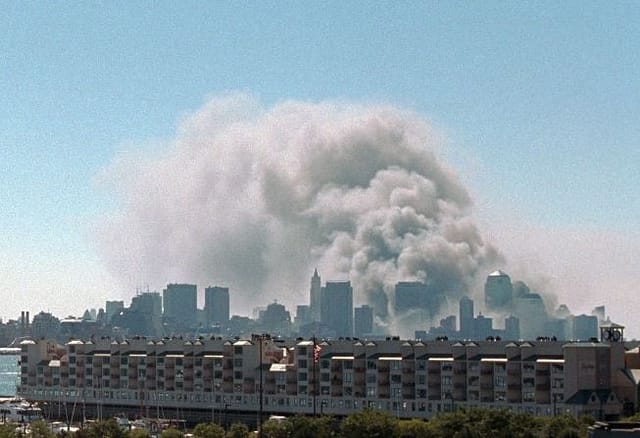
 From the earliest hours following the collapse of the World Trade Center towers and the strike on the Pentagon, the demographic footprint of the plot pointed toward Riyadh: fifteen of the nineteen hijackers were Saudi citizens.